A SELF-PACED COURSE AND PRINTABLE KEEPSAKE LETTER BOOK
Legacy Letters
a practice for those leaving and those left behind
The most important letter you’ll ever write.
Think about the people you love most. What do they actually have of you, in writing?
Probably not much. A card or two. Some old texts. Maybe a social media post from a few years back.
Not the real stuff. Not where you came from. Not what you've learned. Not what you want for them when you're not around to tell them anymore.
The letter that holds all of that is called a legacy letter. People have been writing them for a very long time, way before any of us had words like grief or self-care. They did it because they knew the people they loved would need something of them to hold onto.
And the research backs up this ancient practice.
91% of people who sat down and wrote a legacy document said it was one of the most meaningful things they'd ever done.
81% said it helped, or would help, the people they loved most.
78% of family members, almost a year after their person died, said the letter was still helping them through their grief.
*From Dr. Harvey Chochinov’s research on legacy writing with 100 patients at the end of life and 60 of their family members, published in the Journal of Clinical Oncology and the Journal of Palliative Medicine.
So why hasn't anyone shown you how to do this? Why aren't we teaching this everywhere?
I honestly don't know. Nobody showed me either.
I've spent twenty years as a school counselor, and most recently at a family grief center, sitting with people through the worst things that can happen in a life. And I can tell you, a legacy letter is the thing almost all of us end up wishing we had.
That's why I made this course.
HOW THIS COURSE WORKS
Two paths, one practice.
PATH ONE
for the people you love
PATH TWO
for someone you’ve lost
When I first started building this course, I thought I was making it for one kind of person. Someone nearing the end of their life, who wants to leave something behind.
But after sitting with people in grief for years, I realized there's a second person who needs this just as much. The one left behind. The one whose dad died and they never got to ask him about his childhood. The one whose best friend is gone and they can't stop writing her texts she'll never see.
Both of them are reaching for the same thing. A way to put their love into words. So I built the course with two paths.
PATH ONE
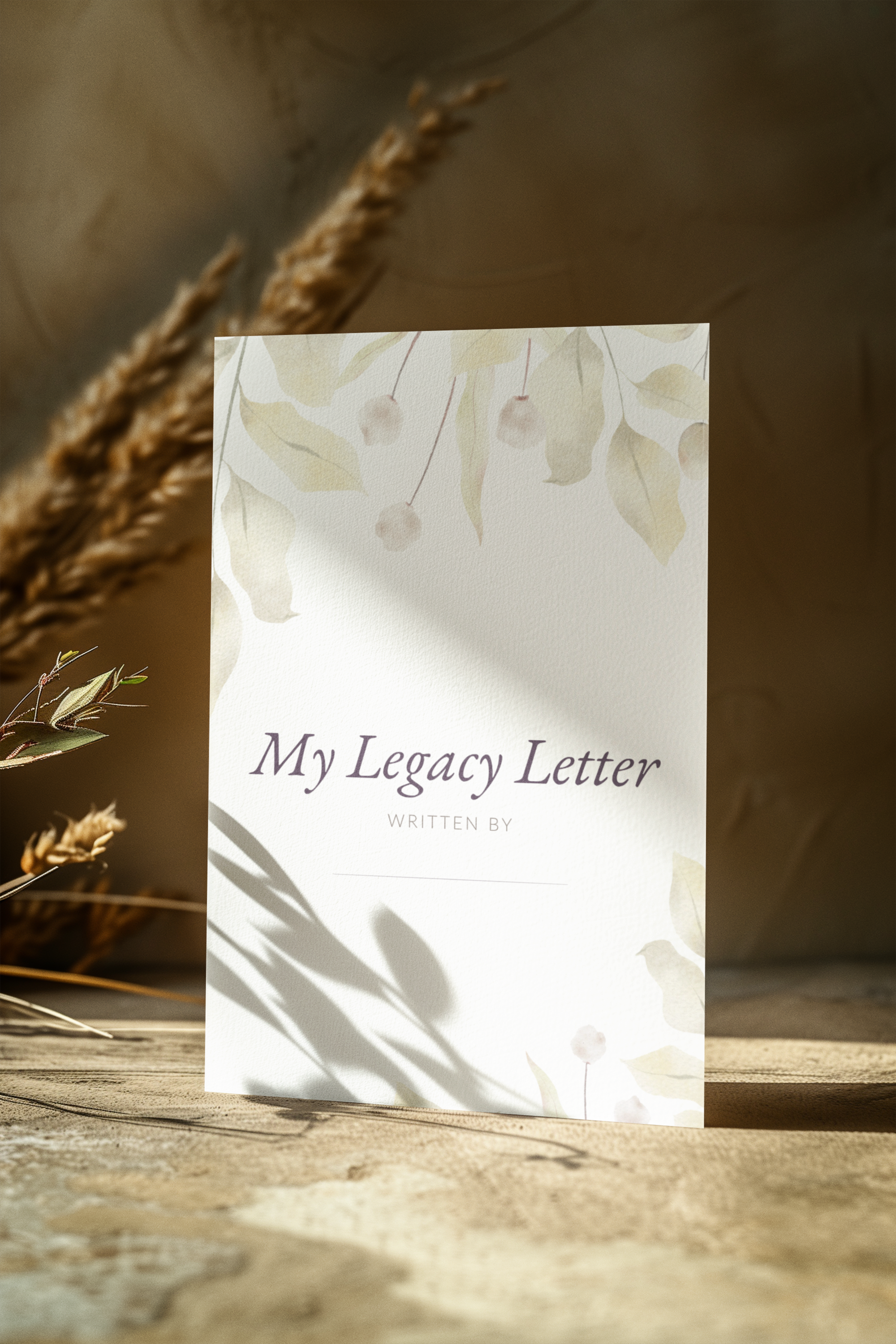
My Legacy Letter
For the one still here, writing to the ones they love.
Maybe you’re getting older, and your kids don’t actually know some of the stories you’ve been carrying for sixty years. Maybe you got a diagnosis you didn’t see coming. Maybe you hit a certain birthday and something inside you said, it’s time.
This path walks you through writing exactly that letter. The one that holds who you loved. What you learned. Things that still need to be said. What you hope for the people you’re leaving behind.
Grounded in dignity therapy, the practice developed by palliative care doctors who spent decades listening to patients at the end of their lives.
PATH TWO
A Legacy Letter in Their Honor
For the one grieving.
If you’ve lost someone, you already know. The love doesn’t stop. It just has nowhere to go. You can’t call them. You can’t text them. You can’t ask one more question.
But you can write to them. And about them.
For a long time, the going advice in grief was to let go. Move on. Close the chapter. Then in the 1990s, a group of researchers started paying attention to what grieving people were actually doing. The ones who did best weren’t the ones who let go. They were the ones who found new ways to stay in relationship with the person they lost. They called it continuing bonds.
Writing A Legacy Letter in Their Honor is one of the most beautiful ways we can do that. We put the love somewhere it can live.
You can start with either path.
When you need it, the other one is here too.
A listening and writing practice.
Here’s what I know about grief and caregiving. There’s no bandwidth. There’s barely enough energy to get through the day. There is definitely not enough for a six-hour workshop or a complicated video course.
So I built this for real life.
Listen.
Each lesson is a short audio recording you can listen to in the car, on a walk, or sitting in a hospital waiting room. Just me, talking to you. Transcripts too, if you’d rather read.
Write.
Each lesson gives you a few sentence starters. You fill them in. One line, one memory, one wish at a time. That becomes one page of your letter. There’s no deadline. The letter is ready when you are.
Keep.
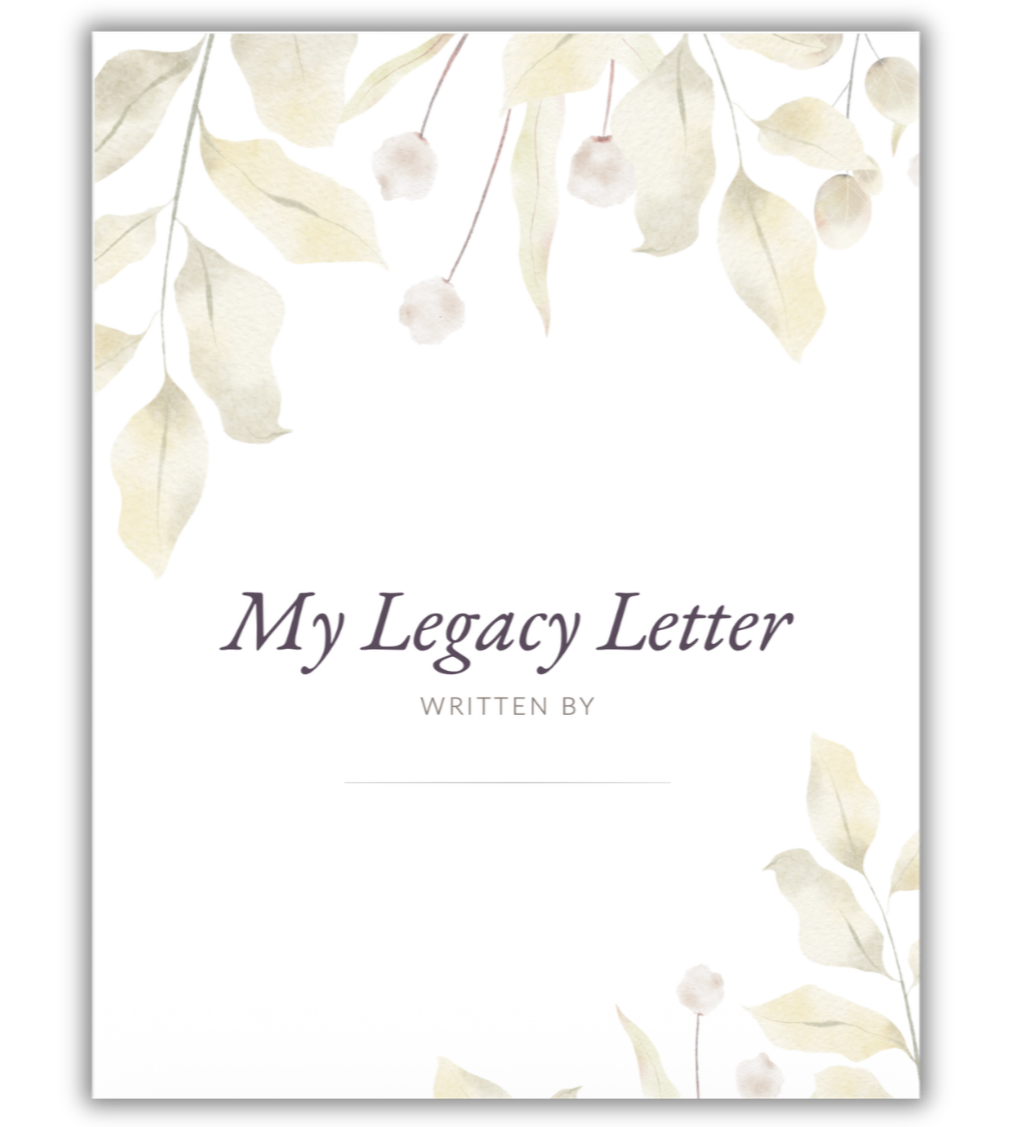
Those pages come together into your printable Keepsake Letter Book. Something you can hold. Keep close by. Give at a holiday or special occasion. Leave for the people you love most.
You don’t have to be a writer.
One true sentence is enough.
WHAT’S INSIDE THE COURSE
How You’ll Write Your Legacy Letter

Both paths begin the same way. A welcome from me, and the Kitchen Table Practice. A simple writing exercise with decades of research behind it. It’s where we start, and what we come back to on the hard days.
Then you choose your path.
PATH ONE
My Legacy Letter
Welcome
My story, the research behind the course, and why writing is the practice that heals.
Introduction: The kitchen table practice
A simple expressive writing exercise. Forty years of research shows it lowers anxiety, improves sleep, and helps the body heal. Where we start before we write, and what we come back to on the hard days.
Module 1: Where you come from
The people, places, and stories that shaped you. The roots you came from. The ones your family may not know unless you tell them.
Module 2: A snapshot of you
The small, day-to-day details that make you you. The ones they can come back to, when they want to find their way back to you.
Module 3: The roles you’ve lived
Parent, child, worker, friend, caretaker. The roles you’ve lived, what made you proud, and what each one taught you.
Module 4: What still needs to be said
The apologies, the thanks, the forgiveness. The love you’ve never said out loud. The words we carry quietly for too long.
Module 5: Hopes and wishes
What you want for the people you love in the years ahead. The blessings only you can give. The quiet prayers you’d say for them.
Module 6: What you’ve learned
The hard-won truths of your life, in your own words. The things you’d want them to know for theirs.
Module 7: The gathering
Where it all comes together into your beautiful printable Keepsake Letter Book.
PATH TWO
A Legacy Letter in Their Honor
Welcome
My story, the research behind the course, and why writing is the practice that heals.
Introduction: The kitchen table practice
A simple expressive writing exercise. Forty years of research shows it lowers anxiety, improves sleep, and helps the body heal. Where we start before we write, and what we come back to on the hard days.
Module 1: Where they came from
The people and places that made them who they were. The story you know, and the parts still worth asking about.
Module 2: A snapshot of them
The small, day-to-day details that made them them. The ones you want to hold onto, and come back to.
Module 3: The lessons they left
The values, the words, the ways of being that live on through you. The things you do, and the ones you don’t, because of them.
Module 4: What still needs to be said
The conversation that didn’t finish. The question you never got to ask. The thing you never said back.
Module 5: Carrying their love forward
The ways their love keeps moving through you. The traditions, the kindnesses, the choices made in their honor.
Module 6: The people who remember with you
The ones who still say their name. The circle still carrying them with you. And if you came up short, how to build yours.
Module 7: The gathering.
Where it all comes together into your beautiful printable Keepsake Letter Book.
About the Author

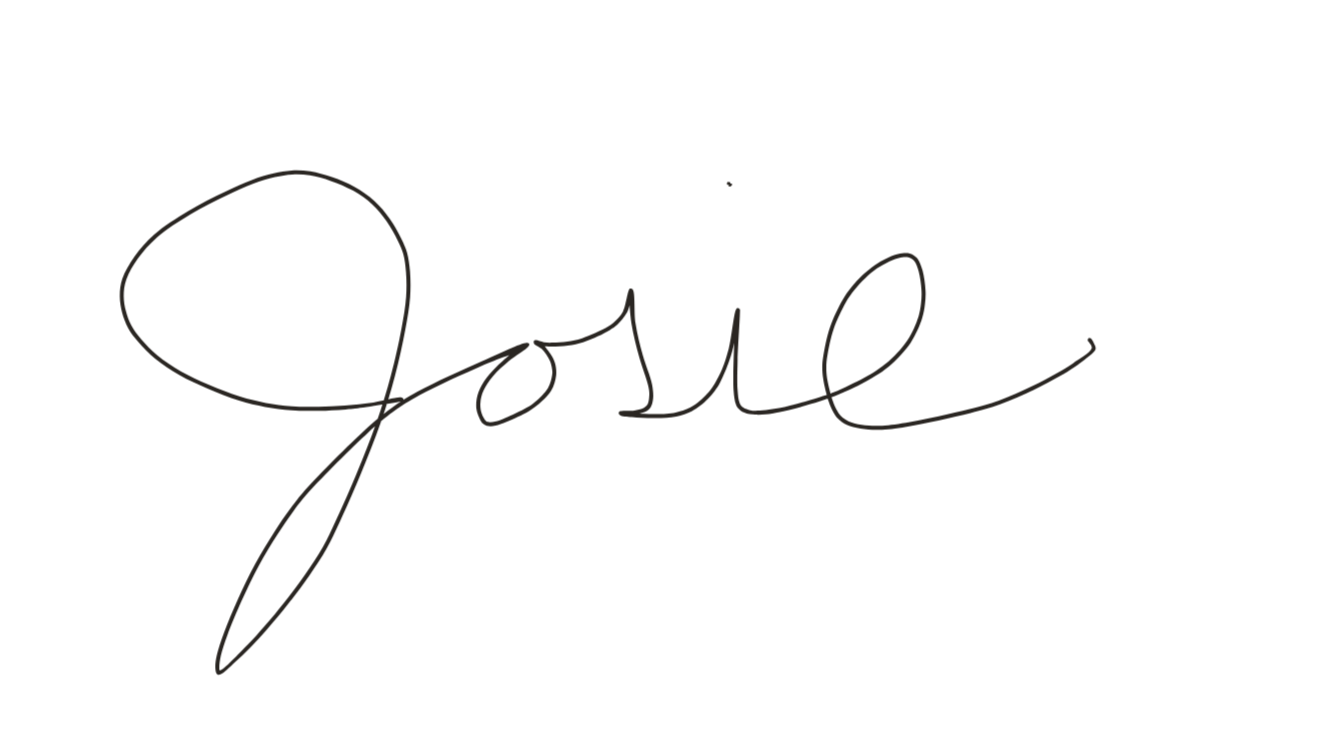
Hi, I’m Josie.
Over a decade ago I wrote a book called The Gratitude Jar: A Simple Guide to Creating Miracles. It was the story of how practicing gratitude with my then four-year-old son transformed me, and our family. Much to my surprise, the book became a bestseller, and led to a stretch of my life where everything felt like it was flowing. I was truly at peace.
Then life tested me.
My mom got Alzheimer’s, and died a few years later. That began what I called my “grief on grief on grief” phase, where people I loved kept dying back to back. My dad. Several close extended family members. Dear friends. There was one year in particular when if felt like I was either in a hospital or at a funeral every week. It was brutal. I walked away from everything — writing, speaking, even my job as a school counselor. I couldn’t sit with kids in their grief when I was drowning in my own.
I was not thriving, for a long time.
What finally helped wasn’t gratitude. Not at first. It was writing. Honest, messy, ugly writing at my kitchen table every morning for months, that helped me sit with the grief and the loss and the pain.
And then, one ordinary morning writing at that same table, the gratitude came back. Full force. For everyone and everything I had loved and lost. And I found my way back.
I went to work at a family grief center and sat with hundreds of families in their worst moments. I came back to school counseling. I came back to writing and speaking, and to using my voice to help people find their way back too.
What I learned from sitting in my own grief, and with hundreds of grieving kids and families, is how much it matters to carry the relationship forward. On the page, and in your life. To give the people you love something to hold onto.
When my mom died, she left me dozens of journals. Her prayers. Her gratitudes. Our family memories. My dad didn’t leave words. He left paintings. I treasure every single one of them.
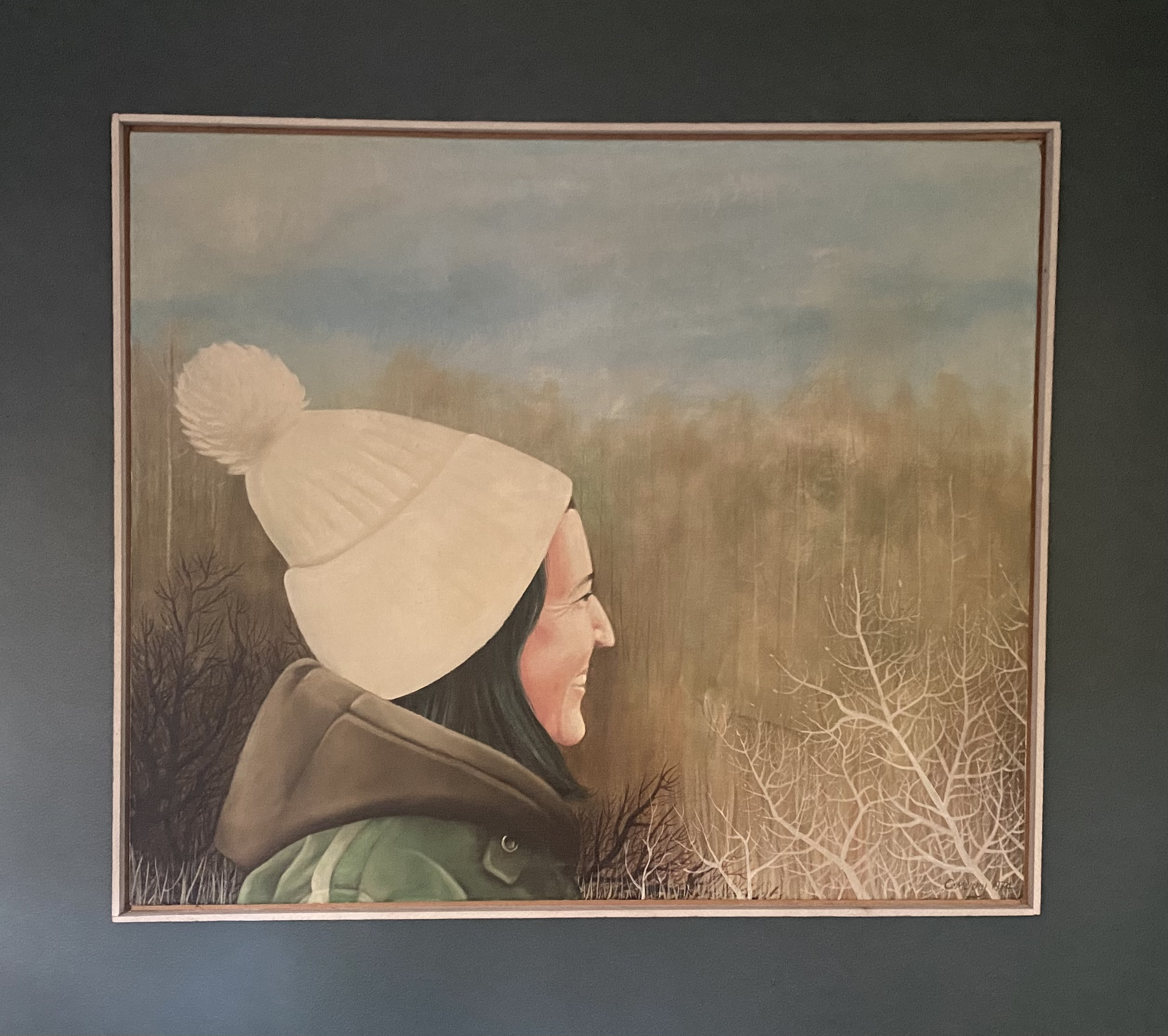
A painting of my mom, by my dad.
Most people don’t leave anything like that behind. Not because they don’t love us. Because nobody ever showed them how to start.
That’s what this course is for.
People keep asking me when I’m going to write another book, and my answer is that I don’t want to write another book with my story in it. I want to help you write yours. Or theirs, if it’s someone you lost. In your own words. For you, and for the people you love.
You don’t have to be a writer to do this. I happen to be one, but my mom wasn’t. Her journals are precious to me because they’re hers. She just wrote memories as she remembered them, in her own voice. If you have a voice, you can do this too.
Your people will treasure it, just like I treasure what the people who loved me left for me.
With love and gratitude,
“Language allows us to reach out to people, to touch them with our innermost fears, hopes, disappointments, victories. To reach out to people we'll never meet.
It's the greatest legacy you could ever leave your children or your loved ones: The history of how you felt.”
― Simon Van Booy
Begin Your Legacy Letter
A self-paced course and printable Keepsake Letter Book. Yours to begin whenever you’re ready. Yours for life.
$97
Scholarships available. If cost is a barrier, request one here.
A portion of every Legacy Letters purchase is donated to the National Alliance for Children’s Grief, which supports grieving children across the country.
Questions
-
Yes. This course is built so you don’t have to be a writer. Each lesson gives you a short prompt and a few sentence starters. You fill in what’s true for you. One memory, one line, one wish at a time. No one is reading your Legacy Letter for the writing. They’re reading it for you.
-
Yes. When you join, both paths are included in the course. Start with the one that calls you first. The other will be here when you need it. Many people move between the two over time.
Some start by writing to the people they love, and later come back to write in honor of someone they lost. Some do it the other way around.
-
Yes, in a couple of ways.
You can gift the course itself through the Give as a Gift button. I’ll send you a beautiful PDF with a link and password you can pass along to your person. Print it, text it, email it, or tuck it inside a card.
You can also write your own Legacy Letter through this course and give that as the gift. Many people who’ve finished theirs have given them as holiday gifts, birthday gifts, or just quiet keepsakes passed along when the moment felt right.
-
No. Legacy Letters is a writing practice, not therapy.
I’m a licensed school counselor and a certified grief specialist through the American School Counselor Association, and I’ve spent years sitting with grieving kids and families. I believe in therapy. I’ve been in it myself and I’ve watched it help people through the hardest things. This course is a companion to that work, not a replacement for it.
It’s a quiet practice you can do at your own kitchen table, grounded in decades of research on how writing helps us sit with what’s hard. If you’re already in therapy, or thinking about it, Legacy Letters sits well alongside it.
-
Legacy Letters draws from decades of research in palliative care, grief psychology, and expressive writing. The practice is built on four main pillars.
Dignity Therapy (Dr. Harvey Chochinov). 91% of people who wrote their letter said it was one of the most meaningful things they had ever done. 76% said it helped them find peace, and 81% said it helped their family through their grief.
Continuing Bonds (Dr. Dennis Klass and colleagues). Overturned a century of grief theory by showing that the grievers who did best were the ones who stayed in relationship with the person they lost.
Expressive Writing (Dr. James Pennebaker). Forty years of research showing reduced anxiety, better sleep, and faster physical healing in people who write about hard things.
Post-Traumatic Growth (Dr. Richard Tedeschi and Dr. Lawrence Calhoun). Grief changes us. Many grievers come out of it with deeper relationships, new purpose, and a stronger sense of what matters. The research shows this kind of growth is more common in people who do meaning-making practices like writing.
-
If the course isn’t the right fit, contact me within 30 days and I’ll refund you. Just a short note. No explanation needed.
-
After your purchase, I’ll send you an email with a link and a password to open the course. Save the email so you can come back anytime, for life.
Still have questions? Contact me.
I do my best to respond to every message personally.
…